News

Olympic discipline

Sport Climbing

IMF coordinates sport climbing in India as the national body affiliated to World Climbing (IFSC).

Sport Climbing in India

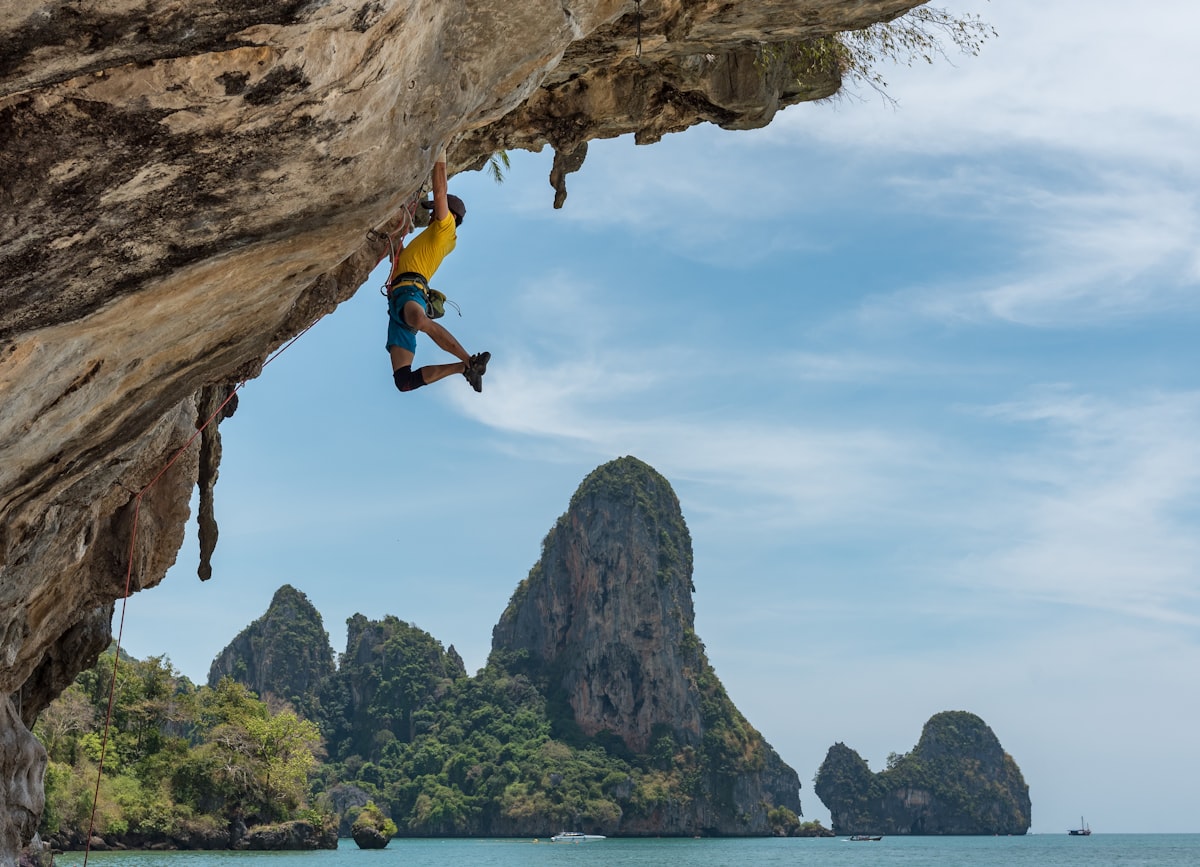
Sport climbing evolved from natural rock climbing and is considerably more accessible than traditional forms of climbing, both in terms of location and cost. Although its origins can be traced to mountaineering, it has developed into a distinct sport practiced by millions of people across the world, both indoors and outdoors.

Climbing routes can be found in a variety of settings, including outdoor rock crags, indoor climbing gyms, artificial walls, and competition arenas.

Sport climbing on artificial wall surfaces was officially included as an additional sport for the Tokyo 2020 Olympic Games following the IOC Session held in Rio de Janeiro in August 2016. It was also included as a medal sport at the 2018 Youth Olympic Games in Buenos Aires.

World Climbing is the international governing body for competitive climbing. It was established in Frankfurt on 27 January 2007 by 48 member federations. The IFSC is recognised by the International Olympic Committee (IOC) and is a member of the Association of IOC Recognised International Sports Federations (ARISF), SportAccord, and the International World Games Association (IWGA).

IMF represents India in World Climbing (IFSC) and coordinates sport climbing nationally through the National Sport Climbing Committee and zonal committees.

Disciplines

Boulder

Boulder

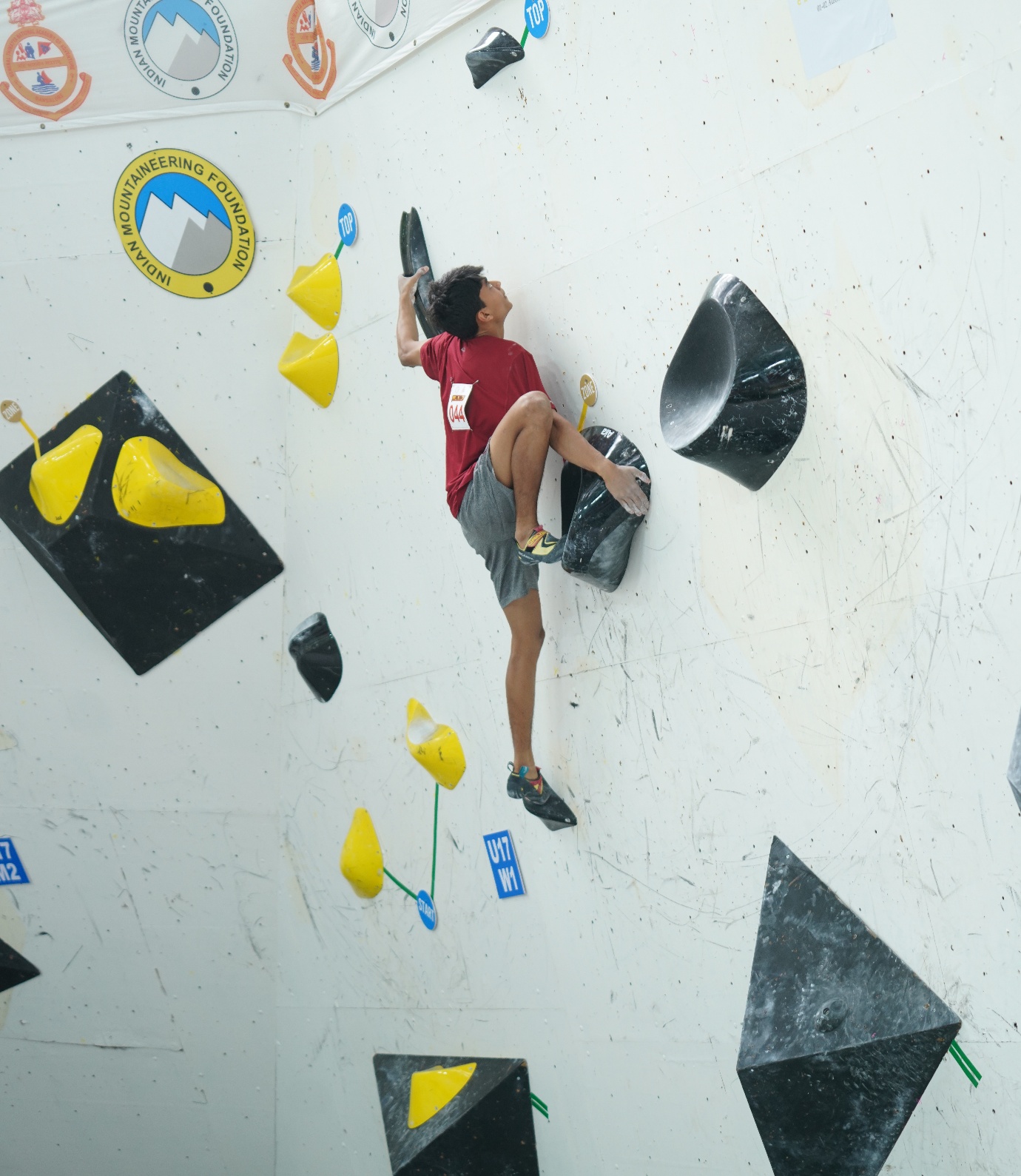
An explosive performance on routes (problems) with a maximum height of 4 metres and safety mats below. The athlete who solves the most problems in the lowest number of attempts wins.

  • •Boulder competitions take place on 4-metre-high walls equipped with safety mats.
  • •The aim of Boulder is to solve (complete) the most problems (routes) on four/five (round-dependent) boulders in the lowest number of attempts over a given period of time.
  • •Different problems are set for men and women.
  • •The problems are reset between the Qualification, Semifinals and the Final.
  • •In Finals, competitors can preview the boulder problems during a collective observation time (2 minutes per Boulder) but cannot attempt the problems. In Qualifications and Semifinals, the climbers observe the problems for the first time during their first attempt (no observation prior to the round).
  • •Competitors are kept in an isolation room before they perform their “on sight” attempt.
  • •The Boulder ranking is decided by the number of problems solved. The competitor who solves the most problems wins.
  • •One zone hold (approximately the halfway point on a problem) is set per problem.
  • •The Boulder ranking is based on: 1. Number of tops reached, 2. Number of zone holds reached, 3. Number of attempts to top, 4. Number of attempts to zone.
Lead

Lead

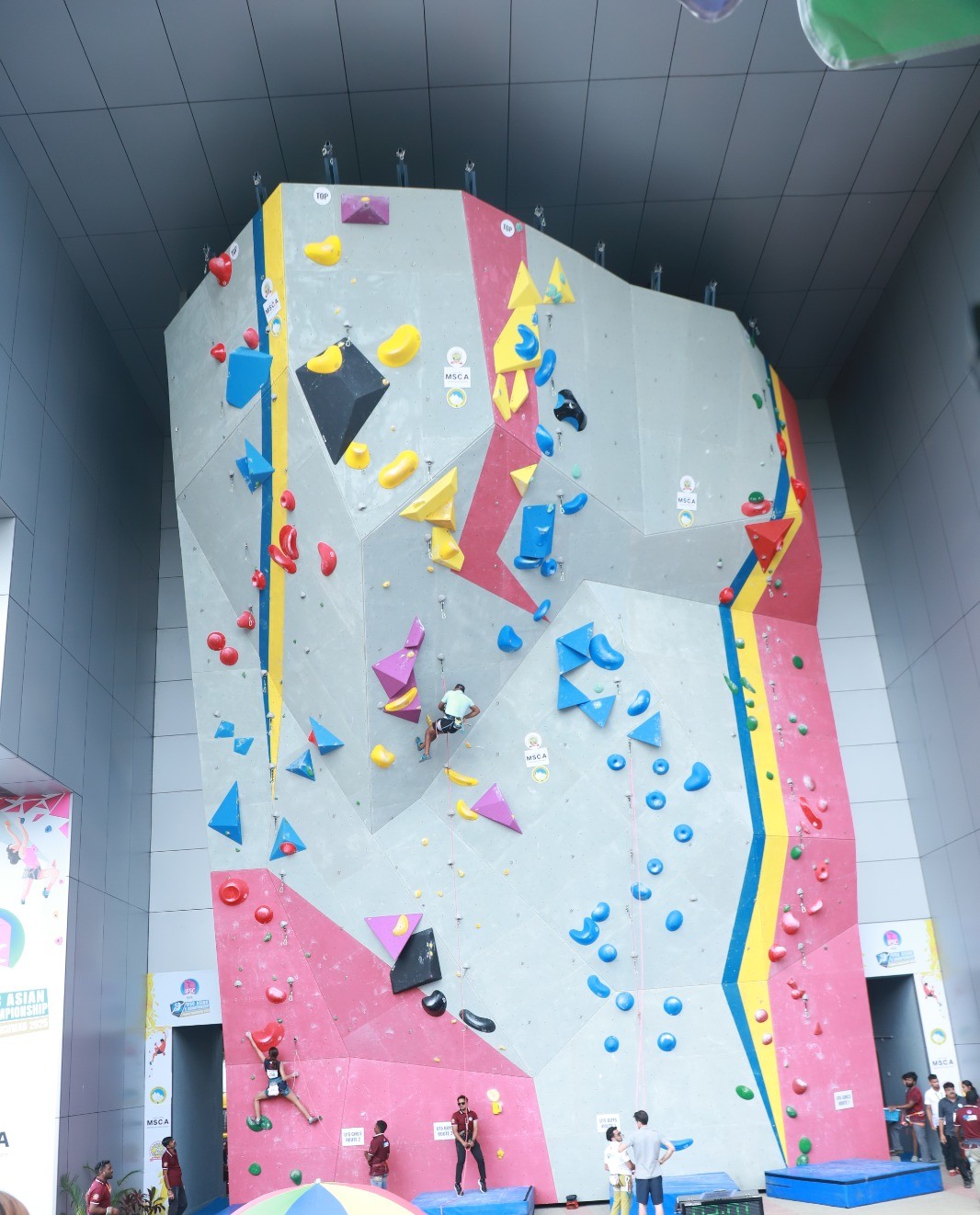
Athletes climb secured by a rope, one at a time, on an overhanging route with a 6-minute time limit. The athlete who reaches the highest point wins.

  • •In Lead, the aim for the competitors is to go as high as possible in an individual attempt on a 15m wall.
  • •The competitors have a limited amount of time (six (6) minutes) for their attempt.
  • •The Lead ranking is set based on the height (hold number) achieved by the competitors. A competitor gets a “+” added to their score if moving in the direction of the next hold.
  • •The routes are reset between the Qualification, Semifinals and the Final.
  • •Competitors can preview the route during a collective observation time (six (6) minutes), but cannot attempt the route (no observation in the Qualification round).
  • •Competitors are kept in an isolation room before they perform their “on sight” attempt (no isolation in the Qualification round).
  • •There are different routes for men and women competitors.
Speed

Speed

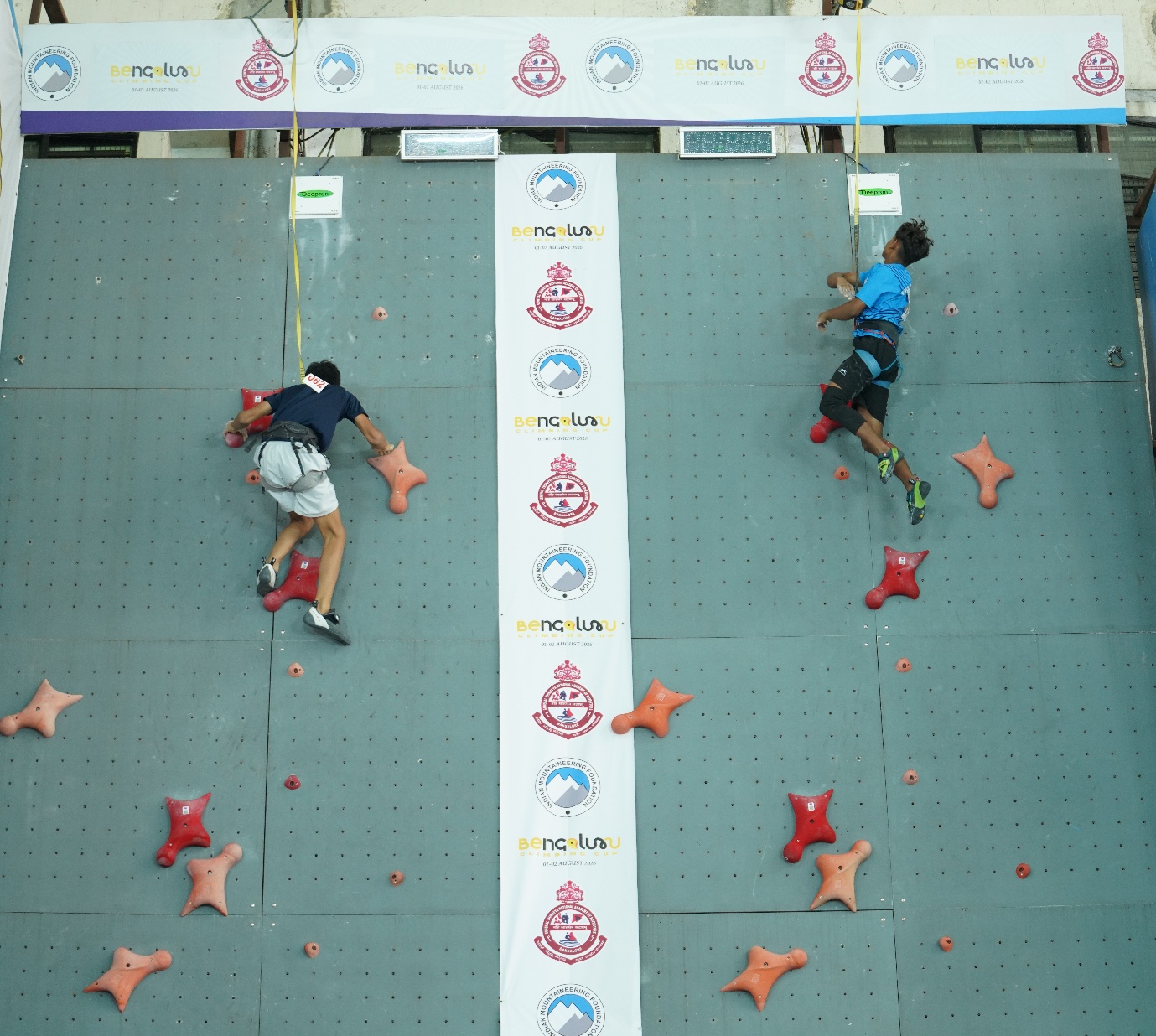
Secured from above, climbers race up standardised, parallel routes. The objective of Speed is to reach the top of a 15-metre wall in the shortest possible time.

  • •Men and women compete on identical routes, which remain unchanged throughout all rounds of the competition.
  • •In the final rounds, athletes compete head-to-head, with the winner being the first to hit the finish pad at the top of the wall.
  • •Speed competitions have historically been held on two-lane walls. Four-lane formats have been used only at selected regional events, such as the Asian Games. In 2024, World Climbing officially tested a four-lane format in Madrid, ahead of its international debut at The World Games in Chengdu, China, in August 2025. In 2026, the World Climbing Series will, for the first time, feature three standalone Speed events held on four-lane walls, with both individual and relay medals awarded.
  • •Speed is the only Climbing discipline with officially recognised world, continental, and Olympic records, with a total of 32 records currently tracked.
  • •Explore the complete record lists for women, men, and mixed teams.

Sport Climbing Competitive Pathway

India’s sport climbing competition structure provides a clear pathway for athletes to enter the sport, develop their abilities, compete at progressively higher levels, and ultimately represent the country on the international stage.

  1. Level 4

    International Competitions

    The highest stage of the competitive pathway, where India’s top athletes compete at prestigious events such as World Cups, Asian Championships, Asian Games, Youth World Championships, and an entry to Olympic.

  2. Level 3

    National Championship

    The highest level of competition at the national level in sport climbing, bringing together athletes across all age categories and disciplines. The championship is conducted annually by the IMF and is hosted across different zones. A Rolling Trophy for the Overall Championship is awarded to the zone that secures the highest number of awards across the competition.

  3. Level 2

    Zonal Championships

    Regional-level competitions that bring together athletes from several states as per the zones and form the basis for the qualification for the National Championship.

  4. Level 1

    State Championships

    Annual state-level competitions conducted across affiliated states, offering participation opportunities across all age groups.

Para Climbing

Para Climbing is Sport Climbing for athletes with disabilities. Athletes are placed into a Sport Class based on their disability, to allow those with a disability of a similar nature to compete within the same category.

  • •The IFSC has been hosting Para Climbing competitions since 2006, when the first international event saw athletes from four National Federations compete in Ekaterinburg, Russia.
  • •The movement has grown in recent years, with a regular circuit being added to the IFSC calendar from 2010 and IFSC Para Climbing World Championships taking place from July 2011.
  • •It has become tradition that the IFSC Para Climbing World Championships run alongside the IFSC Climbing World Championships, promoting athletes with disability on the same stage as other athletes.
  • •Proud of the rapid growth of the Para Climbing community, and of the increasing standard of competitions, the IFSC remains dedicated to developing and strengthening the competitions and support available to athletes.
  • •In 2017, the International Paralympic Committee (IPC) granted the IFSC the status of Recognised International Federation.
  • •In October 2018, a plan was elaborated for developing the sport further. The plan was unanimously approved at the 2019 IFSC General Assembly in Tokyo, Japan, officially declaring the start of a new era for Para Climbing and its vibrant, committed, and enthusiastic community.

Training courses

  • •Sport Climbing Introductory course — 5 day foundation level course for athletes
  • •Belayer Course — 3 day course
  • •Route Setters Course — 3 day course
  • •Judges Course — 3 day course
See course dates in Events

Sport Climbing zones

Zonal committees coordinate competitions, courses and athlete pathways. Each zone has its own flag colour, matching the national zone map.

North Zone

5

States: Delhi, Jammu & Kashmir, Ladakh, Punjab, Haryana, Himachal Pradesh, Uttarakhand, Uttar Pradesh

Chairman: Col Amit Bisht

Secretary: Mr Rohit Mishra

imfnorthzone@gmail.com

10

Judges

9

Route Setters

23

Belayers

100

Registered climbers

International medals

2 Gold 0 Silver 3 Bronze

International events hosted: 1 Event - Asia Cup 2004

Joint Secretary: Mrs Tusi Anit Shah

Treasurer: Mrs Sushma Malik

Address: 6, Benito Juarez Marg, South Campus, South Moti Bagh, New Delhi, Delhi 110021

Formed: 1998

Nationals hosted: 17

South Zone

18

States: Andhra Pradesh, Telangana, Karnataka, Kerala, Tamil Nadu, Puducherry, Andaman & Nicobar Island

Chairman: Brig. Krishan Kumar, AVSM

Secretary: Bhagya B K

bhagya27bk@gmail.com

12

Judges

6

Route Setters

7

Belayers

—

Registered climbers

International medals

1 Gold 8 Silver 3 Bronze

International events hosted: 2 events - Bengaluru Bouldering Championship 2017 and IFSC Asian Youth Championship 2019

Joint Secretary: Reshma KV

Treasurer: Mr. Krishna Murthy

Joint Treasurer: Mr. Muniraju

Address: #546, 3rd Floor, Chinmaya Mission Hospital Road, Above RBL bank, Indiranagar, Bangalore -560038.

Formed: 1997

Nationals hosted: 7

East Zone

2

States: West Bengal, Odisha, Jharkhand, Bihar

Chairman: Shri Debraj Dutta

Secretary: Pallab Das

pdpallabdas07@gmail.com

West Zone

States: Rajasthan, Maharashtra, Gujarat, Goa, Madhya Pradesh, Chhattisgarh

Chairman: Ms K Saraswati

Secretary: Shri Shrikrishna Kaduskar

shrikrishnakaduskar@gmail.com

15

Judges

10

Route Setters

16

Belayers

Approx 500 plus

Registered climbers

International medals

1 Gold 4 Silver 2 Bronze

International events hosted: International = 2 World Cups, Continental = 1 AKCH

Joint Secretary: Namrata Nikam

Treasurer: Shri Sachin Wadekar

Joint Treasurer: Prakash Kelshekar

Address: Flat No 5, Anant Apt, Opp Moraya Gosavi Samadhi Mandir, Chinchwadgaon, Pune 411033

Formed: 1995

Nationals hosted: 2

North East Zone

States: Assam, Arunachal Pradesh, Manipur, Mizoram, Meghalaya, Nagaland, Sikkim, Tripura

Chairman: Shri KN Damo

Secretary: Dr K Romeo Meetei

13

Judges

15

Route Setters

4

Belayers

400

Registered climbers

International medals

4 Gold 1 Silver 0 Bronze

International events hosted: Intl Speed X invitational Competition 2011

Service Zone

States: Comprising all three secretes viz Army, Navy, and Air Force

Chairman: Col Kunwar Partap Singh

Secretary: Lt Col Manoj Joshi

armyadventurewing@gmail.com

10

Judges

5

Route Setters

6

Belayers

74

Registered climbers

Address: Army Adventure Wing, General Staf Branch, DCOAS(IS & T), IHQ of MoD(Army), New Delhi 110011

Formed: 2011

Nationals hosted: NIL

Central Police Zone

States: All police forces viz , ITBP, BSF, CRPF, SSB….

Chairman: IG TRG, Dte Gen, HQr ITBP New Delhi

Secretary: DIG (Sports & Adventure), Dte, ITBP HQr, New Delhi

digsportsdte@itbp.gov.in

—

Judges

2

Route Setters

—

Belayers

—

Registered climbers

Address: ITBP DTE GEN, CGO COMPLEX ,NEW DELHI

Top Ranking Athletes of the year

Rank Athlete Name Zone Points

Sport Climbing Events

Competitions and courses, with the Info Sheet and registration for each.

8–9 Jan 2026

Kangundi Boulder Competition - Promotional Event

Kuppam, AP · Sport Climbing

Info Sheet Register now Full page →

9–11 Jan 2026

Pachmarhi Climbing Challenge - Promotional Event

Pachmarhi, MP · Sport Climbing

Info Sheet Register now Full page →

22–30 Apr 2026

Asian Beach Games

CHN · Sport Climbing

Info Sheet Register now Full page →

25–26 Apr 2026

Mahendragiri Eco Adventure Fest 2026

Mahendragiri, Odisha · Boulder

Info Sheet Register now Full page →
See all Sport Climbing events All courses

Documents

Event manuals, rankings, circulars, courses and committee papers — filter by category and year.

Gallery

Photos and media coverage by event name.

Also see Multimedia gallery.

Coming soon

Climbing Walls & Gym Directory

Climbing walls and gyms will be able to register on the IMF website. Directory listing will appear here once the registration flow is live.

Anti Doping

Because of the strongly held belief that our sport must be kept clean of those practices that could destroy the sense of what athletes do and their integrity, the IMF committed itself to the fight against doping from the very beginning. The Indian anti-doping framework is governed by the National Anti-Doping Act, 2022 and the National Anti-Doping (Amendment) Act, 2025, as outlined by NADA India.

PRINCIPLES AND VALUES ASSOCIATED WITH CLEAN SPORT

The use of doping substances or doping methods to enhance performance is fundamentally wrong and is detrimental to the overall spirit of sport. Drug misuse can be harmful to an athlete's health and to other athletes competing in the sport. It severely damages the integrity, image and value of sport, whether or not the motivation to use drugs is to improve performance.

To achieve integrity and fairness in sport, a commitment to a clean field of play is critical. The IMF is committed to the eradication of doping from sport and to protecting clean athletes. Doping can be harmful to the athletes’ health, damages the integrity of sport, and is morally and ethically wrong. All athletes participating in IMF competitions must abide by the IMF Anti-Doping Rules.

THE ANTI-DOPING LANDSCAPE

The legislation gives legal force to anti-doping rules across all sports in India, aligning directly with the World Anti-Doping Code. Operates as the core autonomous body responsible for testing, results management, intelligence, investigations, and athlete education.

The National Anti-Doping Agency India (NADA India) (https://nadaindia.yas.gov.in/) is the independent national body responsible for harmonising anti-doping policies in all sports in India. The World Anti-Doping Code is the core document that harmonises anti-doping policies, rules and regulations within sport organisations around the world. The Code is supplemented by eight International Standards, including the Prohibited List that is updated at least annually. Oversees NADA's operations, strengthens institutional autonomy, and advises the government on evolving international standards. Enforces global bans on specific substances and methods in and out of competition, updated regularly in sync with international standards (such as the 2026 Prohibited List - https://www.wada-ama.org/en/resources/world-anti-doping-code-and-international-standards/prohibited-list).

Hall of Fame

International achievements of Indian sport climbers, in chronological order.

achievements

No achievements match.

Milestones

2002

2002 Asian Youth — first international medals

Silver medals in Speed and Lead (U19), Malaysia — India’s first international medals.

2004

2004 Asia Cup, Uttarkashi

First international event hosted in India; first senior international medal for the Indian team.

2012

Para Climbing World Gold (2012)

First gold medal at IFSC Para Climbing World Championship, France.

2009–2017

Asian Youth Championship medals

Multiple golds, silvers and bronzes across 2009–2017 Asian Youth Championships.

2016

2016 Boulder World Cup, Navi Mumbai

India hosted its first IFSC World Cup; athletes from 20 countries competed.

2018–2023

Youth Olympics & Asian Games

Indian teams at Buenos Aires Youth Olympics (2018) and Asian Games (2018, 2023).